

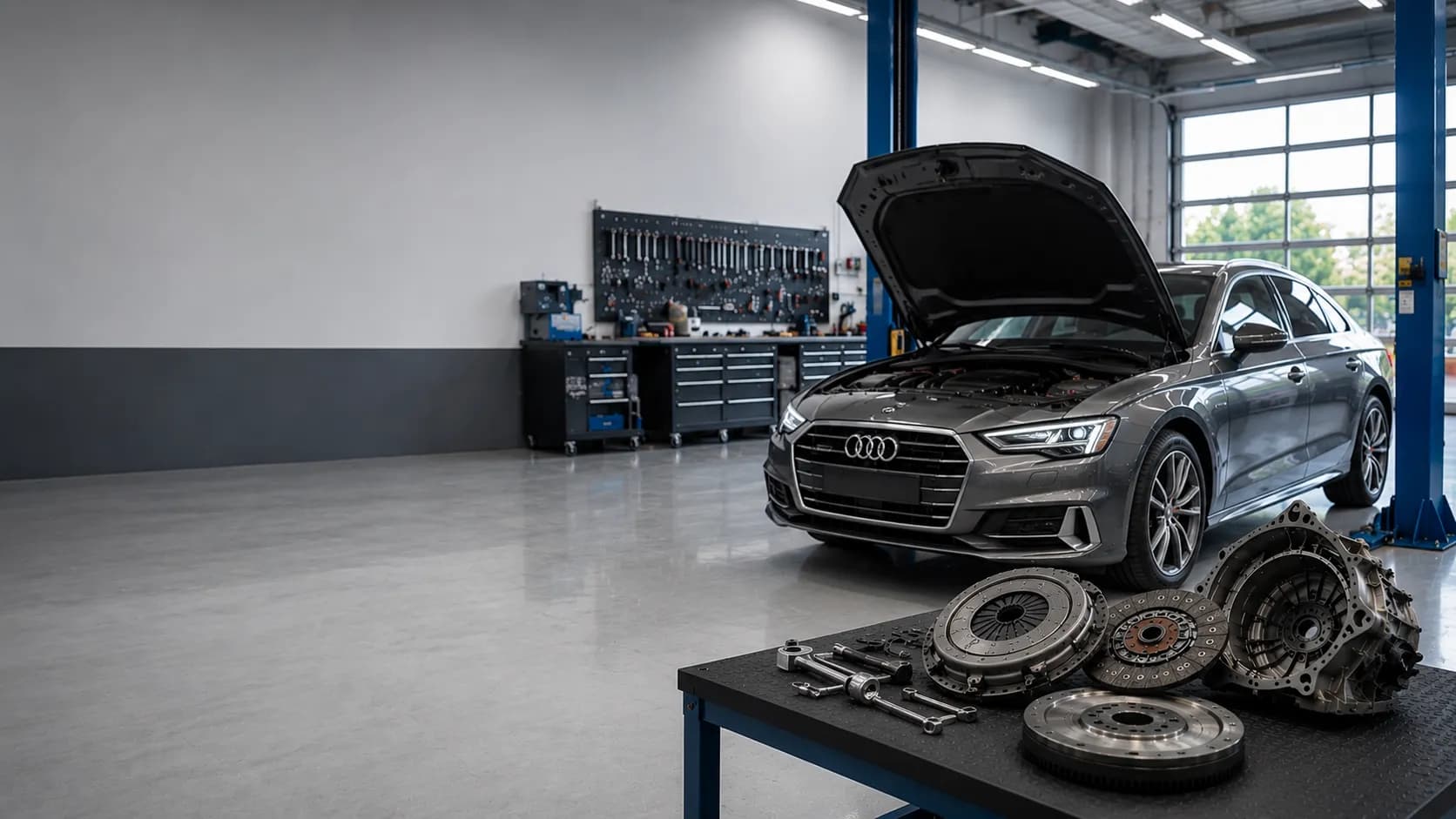
Top European Clutch Replacement Services in Clermont, Florida
From slipping clutches to worn flywheels and hydraulic issues, ECC handles complete clutch system repairs for BMW, Audi, MINI, Volkswagen, Porsche, and more in Florida.
Clutch wear tends to creep in slowly. You notice it in the higher engagement point, rougher shifts, and hesitation when accelerating or moving from a stop. ECC replaces clutch systems across European vehicles with very different performance and driving characteristics.


What Goes Into a Proper Clutch Inspection at ECC
European clutch systems are tuned very differently depending on the platform. Some prioritize lightweight pedal feel while others are designed around torque handling, performance engagement, or daily drivability. Our inspection focuses on how the clutch behaves during actual driving situations rather than simply checking whether the vehicle shifts gears.
- Clutch engagement-point evaluation
- Clutch engagement-point evaluation
- Pedal-feel inspection
- Hydraulic clutch system inspection
- Clutch master-cylinder inspection
- Clutch slave-cylinder inspection
- Flywheel noise & vibration evaluation
- Manual-transmission shift evaluation
- Gear engagement testing
- Drivetrain vibration inspection
- Clutch-release behavior testing
- Road testing under acceleration load
- Digital inspection report
- Repair recommendations based on findings
How Clutch Wear Usually Feels Across European Luxury Cars?
European manufacturers build clutch systems around completely different driving personalities. Some platforms prioritize short engagement travel and sharper response while others focus on smoother daily drivability or higher torque handling. Because of that, clutch wear changes the driving experience differently depending on the vehicle.
BMW Clutch Replacement
Engagement Feel & Flywheel Complaints
BMW clutch wear commonly becomes noticeable through changing engagement feel, drivetrain vibration, or inconsistent power delivery during acceleration.
• Higher clutch engagement point
• Dual-mass flywheel vibration
• Clutch slipping under acceleration
• Rough low-speed engagement
• Pedal-feel inconsistency
3 Series | 5 Series | 2 Series | M Models | Z4
Mercedes-Benz Clutch Replacement
Hydraulic Feel & Engagement Problems
Mercedes manual-transmission platforms commonly expose clutch wear through smoother-driving complaints rather than aggressive slipping symptoms.
• Soft clutch pedal feel
• Hydraulic clutch irregularities
• Delayed engagement feel
• Gear engagement resistance
• Clutch chatter during takeoff
C-Class | SLK | AMG Manual Platforms
Audi Clutch Replacement
Quattro Load & Flywheel Problems
Audi clutch systems commonly experience wear differently because Quattro drivetrains place different load characteristics on the clutch assembly.
• Clutch slipping during boost
• Flywheel vibration
• Rough engagement during launches
• Gear engagement stiffness
• Drivetrain shudder complaints
A4 | A5 | S4 | S5 | TT | RS Models
Volkswagen Clutch Replacement
Daily Driving Wear & Engagement Complaints
Volkswagen clutch wear commonly develops gradually through commuting, stop-and-go traffic, and repeated urban driving.
• High engagement point
• Slipping during acceleration
• Clutch chatter
• Rough first-gear engagement
• Pedal stiffness complaints
Golf | GTI | GLI | Jetta | Golf R
Porsche Clutch Replacement
Performance Engagement & Driver Feel Problems
Porsche clutch systems place much heavier emphasis on engagement precision and drivetrain response than typical passenger vehicles.
• Performance clutch wear
• Heavy clutch pedal complaints
• Flywheel vibration under load
• Engagement inconsistency
• Gear engagement resistance
911 | Cayman | Boxster | Carrera Models
Land Rover Clutch Replacement
Torque Load & SUV Drivability Complaints
Manual Land Rover platforms commonly expose clutch wear through low-speed drivability and heavier drivetrain load conditions.
• Slipping under load
• Rough hill-start engagement
• Heavy pedal feel
• Drivetrain vibration
• Clutch wear during towing use
Defender | Discovery | Range Rover Classic
Volvo Clutch Replacement
Smoothness & Daily Driving Complaints
Volvo clutch complaints commonly appear through drivability smoothness rather than aggressive performance symptoms.
• Clutch engagement irregularities
• Pedal inconsistency
• Rough takeoff feel
• Hydraulic clutch concerns
• Gear engagement resistance
S60 | V70 | C30 | XC70
MINI Clutch Replacement
Compact Performance & Urban Driving Wear
MINI clutch systems commonly wear faster in urban traffic conditions because of shorter gearing and heavier stop-start usage.
• Premature clutch wear
• Clutch slipping under boost
• Rough engagement feel
• Pedal stiffness
• Flywheel chatter
Cooper | Cooper S | JCW | Clubman
Jaguar Clutch Replacement
Performance Touring Drivability Problems
Jaguar clutch complaints commonly involve refinement changes and reduced smoothness during acceleration.
• Drivetrain vibration
• Clutch slipping complaints
• Engagement inconsistency
• Pedal-feel changes
• Gear engagement resistance
F-TYPE | XK | XE Manual Platforms
FIAT Clutch Replacement
Compact Drivetrain & City Driving Wear
Compact FIAT platforms commonly expose clutch wear quickly during repeated low-speed urban driving.
• Clutch chatter
• Slipping during acceleration
• Rough engagement
• Pedal inconsistency
• Gear engagement difficulty
500 | Abarth | 124 Spider
What This Service Covers
Why European Clutch Issues Are Felt Early and Heard Later?
European manual transmissions are driver-focused and precision-engineered. A clutch replacement on a BMW M car, a Porsche 911, or a Golf GTI is not a job for a generalist — the flywheel specs, clutch kit selection, and break-in procedure all matter.
We replace the full clutch system — disc, pressure plate, release bearing, and flywheel inspection — using the correct OEM or upgraded kit for your driving style.
Signs You Need This Service
- Slipping clutch — engine revs rise without corresponding acceleration
- Difficulty engaging gears or gear grinding
- Burning smell when engaging the clutch
- High clutch engagement point near the top of pedal travel
- Chatter or shudder when releasing the clutch from a stop
Service Details
When replacing a clutch we always inspect the flywheel for heat cracks, scoring, and hot spots. Installing a new clutch on a damaged flywheel guarantees premature failure — we resurface or replace the flywheel when needed and always include it in our estimate upfront.
How ECC Diagnoses Clutch Behavior and Driving Feel in European Vehicles
Understand How The Vehicle Feels During Driving
We start by understanding when the clutch behavior feels wrong: traffic, hill starts, acceleration, cold starts, spirited driving, or repeated stop-and-go conditions.
Evaluate Clutch Engagement Behavior
The vehicle is tested to evaluate engagement smoothness, pedal consistency, slipping behavior, and drivetrain response under load.
Observe Flywheel & Drivetrain Behavior
European clutch systems often involve dual-mass flywheels that influence vibration, drivability, and low-speed smoothness.
Inspect Hydraulic & Mechanical Components
Hydraulic systems, clutch assemblies, release mechanisms, and related drivetrain components are inspected for wear or irregular operation.
Separate Clutch Problems From Other Drivetrain Complaints
Drivetrain vibration, transmission issues, flywheel wear, and clutch wear can create overlapping symptoms. We isolate the actual source before recommending repairs.
Replace Components & Verify Drivability
After repairs, the vehicle is retested to confirm engagement quality, pedal feel, shifting behavior, and drivetrain smoothness.
Deliver Findings & Recommendations
You'll receive clear findings explaining what changed in the clutch behavior, what components are worn, and what repairs are recommended.
European Car Brands We Service for Clutch Repairs at
ECC in Clermont
No two European clutch systems are set up the same. From daily drivers to performance-focused cars, the feel and response can vary a lot. ECC works across all of them.
Real Feedback on Clutch Replacement from European Vehicle Owners at ECC
Amazing service and even better people. They helped my son with his car and treated him like family. It’s hard to find a shop you can truly trust, but this is one of them. We’re very thankful and highly recommend them!

Great price, Professional, honest, and dependable. Great service, clear communication, and quality work. It’s refreshing to find a mechanic shop you can actually trust. I’ll definitely be coming back and recommending them to others. Highly recommend giving them a try!
I am so glad I found European Car Care They are incredibly honest, knowledgeable, and provide fair, transparent pricing. They didn't try to overcharge me for unnecessary services. The work was done quickly and professionally. Highly recommend them for anyone looking for a reliable mechanic!
Why Your European Car’s Clutch Feels Different
From Others
A worn clutch doesn't feel the same across every European vehicle. A lightweight MINI clutch behaves differently from a Porsche performance clutch or a BMW dual-mass flywheel setup. Understanding how each drivetrain is supposed to feel makes clutch problems easier to isolate correctly.
Why Fixing Battery Issues in European Cars Takes
More Than a Quick Replacement
Familiarity With European Drivetrain Feel
Clutch engagement characteristics vary dramatically across European platforms
Experience With Dual-Mass Flywheel Systems
Many European vehicles rely heavily on flywheel behavior for drivability smoothness
Understanding Of Performance-Oriented Clutch Systems
Sport-oriented platforms create very different wear patterns and drivability complaints
Focus On Real Driving Feel Rather Than Just Slipping
Many clutch complaints begin before obvious failure occurs
Experience With Manual European Platforms
Pedal feel, engagement behavior, and drivability refinement matter
Repairs Based On Drivability Behavior
We evaluate how the vehicle feels under real driving conditions before recommending repairs
A higher engagement point usually means the clutch friction material has worn over time, changing where the clutch begins transferring power. On many European vehicles, especially BMW, Audi, Volkswagen, and MINI platforms, drivers often notice this gradually before slipping becomes obvious.
Clutch chatter usually happens when engagement stops feeling smooth during initial movement from a stop. Worn clutch discs, contaminated friction surfaces, flywheel wear, heat damage, or dual-mass flywheel deterioration commonly contribute to chatter on European platforms.
Many BMW and Audi manual vehicles use dual-mass flywheels designed to absorb drivetrain vibration. As these components wear, drivers may notice shaking, vibration, shuddering, or inconsistent engagement during takeoff or low-speed driving.
Yes. Dual-mass flywheels are common across European vehicles and can create symptoms that feel similar to clutch failure including vibration, chatter, rough engagement, noise during startup or shutdown, and drivability changes during acceleration.
A heavier clutch pedal can indicate hydraulic issues, pressure plate wear, release bearing problems, clutch linkage wear, or increased resistance inside the clutch assembly itself. On performance-oriented European vehicles, pedal feel changes are often noticed quickly.
Clutch lifespan depends heavily on driving style, traffic exposure, power output, and vehicle usage. Many European clutches can last well beyond 60,000 to 100,000+ miles, while performance driving, repeated stop-and-go traffic, towing, or aggressive launches can shorten lifespan significantly.
Yes. Repeated stop-and-go traffic, excessive clutch slipping, hill starts, crawling traffic, and urban commuting place significantly more wear on clutch systems than consistent highway driving. Compact performance platforms like MINI, GTI, and BMW manual vehicles often experience this more aggressively.
Most European clutch replacements require significant labor because transmission removal is usually necessary. Repair times vary depending on drivetrain layout, AWD systems, subframe design, and flywheel replacement requirements, but most repairs typically require more than a single quick-service visit.