

Car Dashboard Warning Lights Explained: The Complete Beginner's Guide
AI Summary
- •Red dashboard warning lights (brakes, oil pressure, engine temperature, battery, airbag) mean stop driving and pull over safely as soon as possible.
- •Yellow or orange warning lights, including check engine and TPMS, usually allow continued driving but call for an inspection within days.
- •A flashing check engine light signals a serious problem and should never be ignored, unlike a solid light, which can often wait for scheduled service.
- •Not all car dashboard warning lights indicate major repairs - a loose fuel cap or low washer fluid can trigger alerts that resolve on their own.
- •European vehicles like BMW, Porche, and Audi often have text-based dashboard messages for warnings, and ECC's technicians use manufacturer-grade diagnostics to accurately identify the cause of any dashboard warning light.
Seeing an unfamiliar light appear on your dashboard can be unsettling, especially if you're not sure what it means or whether it's safe to keep driving. The good news is that not every dashboard warning light signals a major problem. Some require you to stop the vehicle immediately, while others simply remind you that it's time for maintenance or a routine inspection. Knowing how to identify these warnings and respond appropriately can save you from unnecessary stress, expensive repairs, and potentially unsafe situations.
The 2026 CarMD Vehicle Health Index, which analyzed more than 39 million vehicle failures and recommended repairs, found that many costly repairs begin as small issues that drivers ignore. The report also highlights a rise in dashboard alerts related to safety systems, making it more important than ever to understand what your vehicle is trying to tell you.
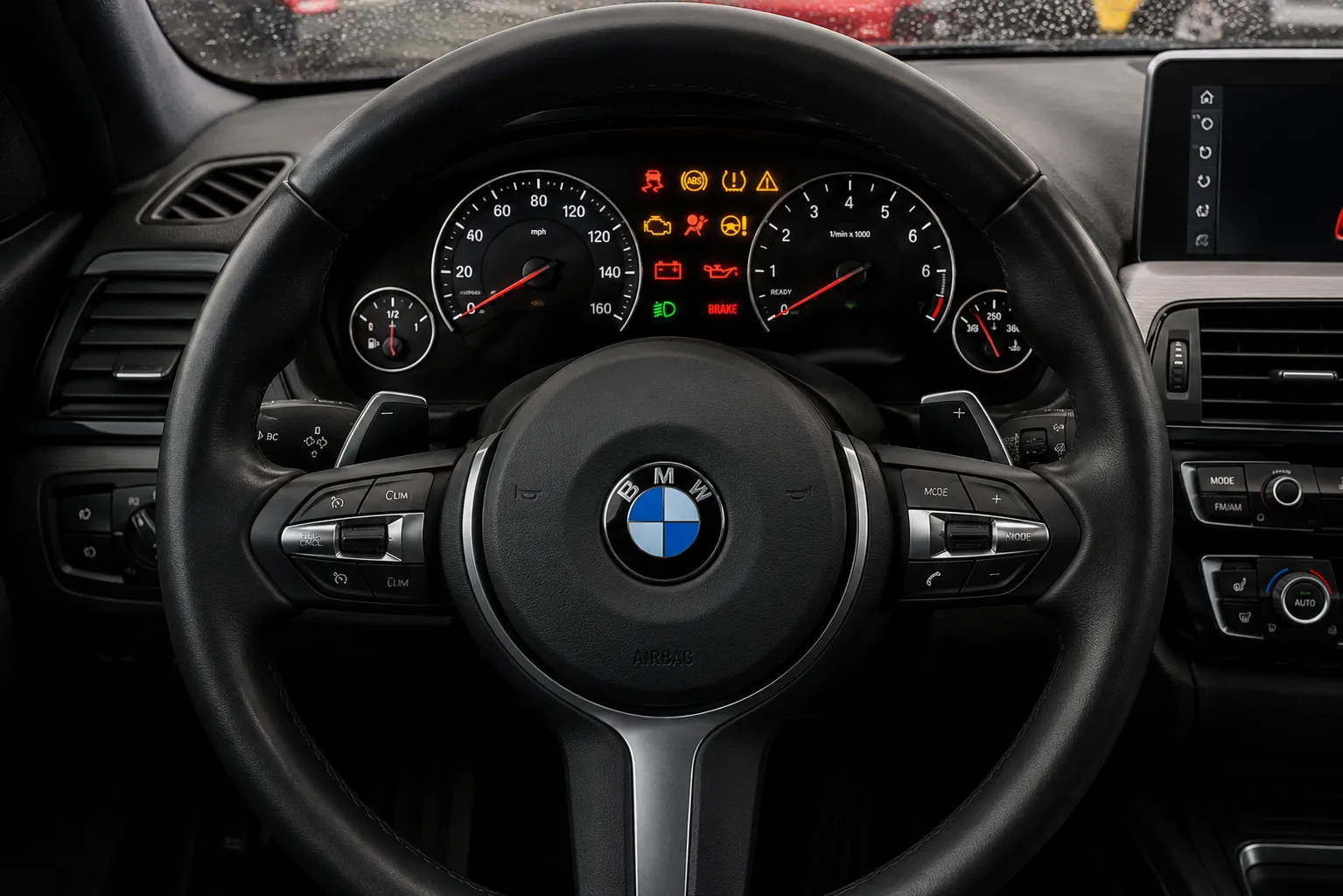
Car dashboard warning lights are your vehicle's way of communicating with you. Every icon, message, or alert on the instrument cluster is designed to help you spot potential issues before they become bigger problems. While many car dashboard warning symbols and car dashboard indicator lights are standardized across the industry, some vehicle dashboard warning lights can vary depending on the make and model, especially in modern European vehicles. Understanding what these warnings mean is one of the simplest ways to drive with greater confidence and keep your vehicle running safely.
What Are Car Dashboard Warning Lights and Why Do They Matter?
You've probably noticed dozens of symbols on your dashboard, but most of the time, they stay hidden. They only light up when your car wants to tell you something. Sometimes it's as simple as reminding you to top up a fluid, and other times it's warning you about a problem that needs immediate attention. Knowing the difference can help you avoid unnecessary stress and make better decisions while you're on the road.
How Your Vehicle Uses Dashboard Warning Lights to Communicate
Think of your dashboard as your car's way of starting a conversation with you. Whenever something isn't working as it should, your vehicle lets you know by turning on one of its car dashboard indicator lights.
These alerts can be related to things like:
· Engine performance
· Brakes
· Tire pressure
· Battery and charging system
· Engine oil
· Coolant temperature
· Steering and other safety systems
Instead of asking you to figure out what's wrong under the hood, your car uses these vehicle warning indicators to point you in the right direction. In many newer vehicles, you'll even see a message on the screen alongside the car dashboard warning symbols, making it easier to understand what needs your attention.
Why Not Every Warning Light Means a Serious Problem
If a warning light suddenly appears, don't assume the worst. While some vehicle dashboard warning lights mean you should stop driving as soon as it's safe, many are simply letting you know that something needs to be checked soon.
For example:
· A low washer fluid light usually means it's time for a refill.
· A low tire pressure warning tells you one or more tires need attention.
· A check engine light could be caused by something minor, like a loose fuel cap, or it could point to a problem that needs professional diagnosis.
The important thing is not to ignore the warning or panic because you see one. Once you understand what these dashboard warning signs in cars are trying to tell you, it's much easier to know whether you can keep driving or if it's time to pull over and get help.
Car Dashboard Warning Lights by Color and Severity
One of the easiest ways to understand Car Dashboard Warning Lights is by looking at their color. Car manufacturers use colors to help you quickly judge how urgent a warning is, even before you know exactly what the symbol means.
| Color | What It Means | What You Should Do |
|---|---|---|
🔴 Red | A serious issue or safety concern | Pull over safely and stop driving. |
🟡 Yellow/Orange | A problem that needs attention | Drive carefully and schedule an inspection soon. |
🟢 Green | A system is active or working as intended | No action required. |
🔵 Blue | Informational alert | Continue driving normally unless another warning appears. |
While this color system is followed by most manufacturers, some European vehicles may display additional messages or use different wording to provide more details about the issue.
Red Dashboard Warning Lights: Pull Over and Stop Driving
A red warning light is your car's way of saying, "Don't ignore me." These warnings usually point to problems that could affect your safety or cause serious damage if you continue driving.
If you're wondering, "A red warning light appeared on my dashboard while I was on the highway. Which dashboard warning lights mean I should pull over right away?" the answer is simple: if it's related to your brakes, engine temperature, oil pressure, or another critical system, find a safe place to stop as soon as possible.
Some of the most common red warning lights include:
· Brake System Warning: Could mean low brake fluid, worn brake components, or a braking system fault.
· Engine Oil Pressure Warning: Indicates your engine isn't getting enough oil pressure. Driving further can cause severe engine damage.
· Engine Temperature Warning: Your engine is overheating and should be turned off as soon as it's safe to do so.
· Battery or Charging System Warning: Your battery may no longer be charging properly, and the vehicle could eventually stall.
· Airbag (SRS) Warning: Your airbag system may not work properly in the event of a collision.
What should you do?
· Pull over somewhere safe.
· Turn off the engine if overheating or oil pressure is the issue.
· Avoid continuing your journey unless you're certain it's safe.
· Arrange roadside assistance or have the vehicle inspected before driving again.
Yellow and Orange Dashboard Warning Lights: Drive Carefully and Schedule Service
Yellow or orange lights are caution signs. They usually mean your vehicle has detected a problem, but it isn't always serious enough to stop driving immediately.
For example, if you're asking, "A yellow engine light just came on while I'm driving. Is it safe to continue?", the answer is usually yes, provided the vehicle feels normal and the light isn't flashing. However, it's still important to have it checked as soon as you can.
Some common car dashboard warning lights you'll see in yellow or orange include:
· Check Engine Light: Could be anything from a loose fuel cap to an engine or emissions issue.
· ABS Warning: The anti-lock braking system needs attention, although your standard brakes may still work.
· Tire Pressure Warning (TPMS): One or more tires are underinflated or losing pressure.
· Traction or Stability Control Warning: The system has been activated or needs inspection.
· Low Fuel Warning: Time to fill up before you run out.
· Service Reminder: Your vehicle is due for routine maintenance.
What should you do?
· Pay attention to how your vehicle feels while driving.
· Avoid ignoring the warning for days or weeks.
· Schedule a service appointment at your earliest convenience.
· If the warning starts flashing or other symptoms appear, stop driving and seek professional help.
Green and Blue Dashboard Warning Lights: Normal Vehicle Information
Unlike red or yellow warnings, green and blue lights usually aren't warnings at all. They're simply letting you know that a feature is switched on or operating normally.
Some examples include:
· High Beam Indicator
· Cruise Control
· Eco Mode
· Turn Signal Indicators
· Fog Lights
These car dashboard indicator lights don't require any repairs or maintenance. They're simply there to keep you informed while you're driving.
That said, if you notice one of these lights staying on when it shouldn't, or it appears alongside another warning, it's worth mentioning it during your next service visit. Sometimes an informational light can help technicians diagnose a related issue more quickly.
What Every Common Car Dashboard Warning Light Means
Common car dashboard warning lights tell you which part of your vehicle needs attention and how urgently you should respond. While the appearance of car dashboard warning symbols and car dashboard indicator lights may vary slightly between manufacturers, most vehicle dashboard warning lights represent the same systems, such as the engine, brakes, battery, tires, or routine maintenance. Understanding these dashboard warning signs in cars helps you decide whether it's safe to keep driving or if it's time to have your vehicle inspected.
| Warning Light | What It Means | Severity | Can You Keep Driving? | What You Should Do |
|---|---|---|---|---|
Check Engine | The engine or emissions system has detected a fault. | Medium to High | Yes, if the light is solid and the vehicle is driving normally. No, if it's flashing. | Check the fuel cap first. If the light stays on or flashes, have the vehicle inspected. |
Engine Temperature | The engine is overheating. | High | No | Pull over safely, turn off the engine, and let it cool before seeking assistance. |
Brake Warning | There's a problem with the braking system or brake fluid level. | High | No | Stop driving and opt for brake services immediately. |
ABS Warning | The Anti-lock Braking System isn't functioning properly. | Medium | Yes, but drive carefully. | Schedule a service appointment. |
Power Steering | The power steering system isn't providing normal assistance. | Medium to High | Only if the vehicle can still be steered safely. | Have the steering system inspected as soon as possible. |
Airbag (SRS) | The airbag or seatbelt pretensioner system has detected a fault. | Medium to High | Yes | Book a diagnostic inspection promptly. |
Tire Pressure (TPMS) | One or more tires have low air pressure. | Medium | Yes, if the tire isn't rapidly losing air. | Check and inflate the tires to the recommended pressure. |
Suspension | The suspension system has detected a fault. | Medium to High | Usually yes, but avoid rough roads and high speeds. | |
Battery | The battery or charging system isn't working properly. | High | Only for a short distance, if necessary. | Reduce electrical usage and get a battery service done immediately. |
Oil Pressure | The engine isn't receiving adequate oil pressure. | High | No | Stop the engine immediately and seek professional assistance. |
Oil Service Reminder | Your vehicle is due for an oil change. | Low | Yes | Schedule routine maintenance. |
Low Washer Fluid | The windshield washer fluid reservoir is running low. | Low | Yes | Refill the washer fluid when convenient. |
Low Fuel | The fuel level has reached the reserve level. | Low | Yes, for a limited distance. | Refuel as soon as possible. |
Quick Tip: If you're unsure what a warning light means, don't rely on guesswork. While many vehicle dashboard warning lights are common across different makes and models, others are manufacturer-specific. If the warning stays on, starts flashing, or is accompanied by unusual sounds or changes in the way your vehicle drives, it's always safest to have it inspected by a qualified technician at European Car Care.
What Should You Do When a Dashboard Warning Light Comes On?
The right response depends on which warning light has appeared and how your vehicle is behaving. While some vehicle dashboard warning lights require you to stop immediately, others simply mean it's time to schedule a service. Instead of guessing or ignoring the warning, follow these simple steps to decide what to do next.
Stay Calm and Identify the Warning Light
The first thing to do is stay calm. A warning light doesn't always mean your vehicle is about to break down.
Start by asking yourself these questions:
· What color is the warning light?
· Is the light solid or flashing?
· Has any message appeared on the dashboard?
· Does the vehicle feel or sound different?
If you're unsure what the symbol means, don't rely on guesswork. Check your owner's manual or look up the specific car dashboard warning symbols for your vehicle. Most manufacturers explain what each light represents and whether it's safe to continue driving.
If the light is red, treat it as a potential safety issue. If it's yellow or orange, you can usually continue driving cautiously, provided the vehicle is operating normally.
Check for Obvious Issues Before Assuming the Worst
Not every warning light points to a major mechanical problem. Before assuming the worst, it's worth checking a few simple things that could be causing the alert.
For example, you can:
· Make sure the fuel cap is tightened properly.
· Check if one or more tires look underinflated.
· See if the engine temperature gauge is higher than normal.
· Look for warning messages on the driver information display.
Notice whether the vehicle is making unusual noises, vibrating, or losing power.
Sometimes, the solution is surprisingly simple. A loose fuel cap can trigger the Check Engine light, while low tire pressure or low washer fluid can activate their respective warnings without indicating a major repair.
If everything appears normal but the warning light stays on, it's still a good idea to schedule a professional inspection.
When It's Safe to Keep Driving
In many cases, it's safe to continue driving for a short period, but only if the warning isn't critical and the vehicle feels normal.
As a general rule, you can usually keep driving when:
· The warning light is yellow or orange.
· The vehicle isn't making unusual noises.
· Steering, braking, and acceleration feel normal.
· There are no signs of smoke, overheating, or fluid leaks.
Here is a question many businesses hear from customers.
"I am running a used car dealership and customers keep asking me what the yellow lights on their dashboard mean, so can you suggest how I should explain this in simple terms."
A simple way to answer it is:
Yellow dashboard lights are caution lights, not panic lights. They usually mean the vehicle has detected something that should be checked soon, but it isn't always unsafe to keep driving. The driver should continue cautiously, monitor how the vehicle feels, and schedule a service appointment rather than ignoring the warning altogether.
That explanation helps customers understand that a yellow warning isn't necessarily a sign of an expensive repair, but it also shouldn't be dismissed.
When You Should Call for Roadside Assistance?
Some warning lights mean you shouldn't risk driving any farther. If the vehicle could become unsafe or suffer serious damage, it's best to stop and arrange for assistance.
Call RSA if:
· A red warning light appears.
· The Check Engine light is flashing.
· The engine is overheating.
· The oil pressure warning comes on.
· The vehicle loses power or enters limp mode.
· You notice smoke, burning smells, or significant fluid leaks.
· The brakes or steering don't feel normal.
A common concern we hear is:
"I am running a roadside assistance business and I keep getting calls from confused drivers who don't know if their warning light means they should pull over immediately, so what should I tell them."
The easiest advice is to keep it simple:
· Red warning light: Pull over safely and stop driving.
· Yellow or orange warning light: If the vehicle feels normal, drive carefully to a repair shop or schedule a service appointment.
· Green or blue warning light: These are usually informational and don't require roadside assistance.
When in doubt, it's always safer to stop and ask for professional help than to continue driving and risk turning a small problem into a much larger one.
Not Sure What Your Dashboard Is Trying to Tell You?
From vehicle dashboard warning lights to hidden fault codes, we'll identify the problem quickly and accurately.
Why Dashboard Warning Lights Aren't Always the Same Across Every Vehicle
You might expect every car to use the same dashboard warnings, but that's not always the case. While most car dashboard warning lights represent the same systems, different manufacturers often choose different symbols, messages, and ways of displaying them. That's why a warning light on one vehicle may look completely different on another, even though both are pointing to the same issue.
Standard Warning Lights You'll Find in Most Cars
The good news is that most vehicles share a common set of vehicle dashboard warning lights. Whether you drive a sedan, SUV, truck, or crossover, you'll probably recognize many of the same alerts.
Some of the most common car dashboard warning symbols include:
· Check Engine
· Battery
· Brake System
· Engine Temperature
· Oil Pressure
· Tire Pressure Monitoring System (TPMS)
· ABS
· Airbag (SRS)
· Low Fuel
· Seat Belt Reminder
Even if the symbol looks slightly different from one brand to another, it usually means the same thing. For example, a Check Engine light is still telling you that the engine or emissions system has detected a problem. A battery warning still points to an issue with the charging system.
That's why it's always a good idea to focus on what the warning is telling you, not just what the symbol looks like.
How European Cars Display More Advanced Warning Messages
If you've driven a European vehicle before, you may have noticed that the dashboard gives you more than just a warning light.
Instead of showing only an icon, many European cars also display a message explaining what's happening. In some cases, they'll even tell you what to do next.
Depending on the vehicle, you might see:
· A short message explaining the problem.
· A digital display showing which system needs attention.
· A reminder telling you how many miles remain before your next service.
· Different warning levels for the same issue based on how serious it is.
· Instructions like "Reduce speed," "Drive carefully," or "Visit workshop."
These extra messages don't mean European vehicles have more problems. They simply give drivers more information so they can make better decisions instead of trying to guess what a warning light means.
BMW, Mercedes-Benz, Audi, Volkswagen, Volvo, and Land Rover: What Makes Them Different?
If you own a BMW, Mercedes-Benz, Audi, Volkswagen, Volvo, or Land Rover, don't be surprised if your dashboard looks more advanced than the one in many other vehicles.
Most of these brands use digital instrument clusters that can display much more than a simple warning icon.
Here's what you'll commonly notice:
| Feature | What It Means for You |
|---|---|
Text-based alerts | Instead of only showing a symbol, the dashboard explains what's wrong in plain language. |
Driver information displays | The screen provides more details about the affected system. |
Service countdowns | Your vehicle tells you how many miles or days remain before routine maintenance is due. |
Multiple warning levels | The same warning may change color or display a different message as the problem becomes more serious. |
Brand-specific terminology | Each manufacturer may use different names for its safety systems, maintenance programs, or driver assistance features. |
Let's say you've just started your BMW and instead of seeing a simple warning icon, your dashboard displays a message like "Brake system fault. Drive moderately." If you're driving a different vehicle, you might only see a red brake symbol with no explanation at all. In both cases, your car is warning you about the same system. The difference is that one gives you a little more context before you decide what to do next.
If you've recently bought a European car or you're driving one for the first time, don't be surprised if the dashboard seems more "talkative" than you're used to. It just giving you more information to help you respond appropriately. And if a message doesn't make sense or keeps coming back, it's always best to have the vehicle checked with manufacturer-specific diagnostic equipment. That way, you'll know exactly what the warning means instead of making an educated guess.
Common Mistakes Drivers Make After Seeing a Warning Light
The most common mistakes drivers make after seeing a warning light are ignoring it, assuming the worst, or continuing to drive without understanding what the warning means. While not every dashboard alert is an emergency, every warning deserves your attention. Knowing how to respond can help you avoid unnecessary stress, prevent costly repairs, and keep you safe on the road.
| Common Mistake | What Can Happen | A Better Approach |
|---|---|---|
Ignoring a yellow warning light because the car still drives normally | A small issue can become a bigger and more expensive repair over time. | Schedule an inspection within the next few days instead of putting it off. |
Continuing to drive with a red warning light | You could cause serious vehicle damage or put yourself and others at risk. | Pull over safely and determine whether it's safe to continue driving. |
Assuming every warning light means an expensive repair | You may worry unnecessarily about a problem that could be quick or inexpensive to fix. | Identify what the warning light means before jumping to conclusions. |
Clearing the warning light without fixing the problem | The warning is likely to return because the root cause hasn't been addressed. | Diagnose and fix the issue before resetting the warning. |
Looking up generic answers without considering your vehicle's make and model | Similar warning lights can have different meanings or messages depending on the manufacturer. | Refer to your owner's manual or have the vehicle professionally diagnosed if you're unsure. |
Waiting for additional warning lights to appear | Delaying repairs can allow one problem to affect other vehicle systems. | Deal with the first warning early before it leads to more issues. |
The sooner you respond to a warning light, the easier and often less expensive the repair is likely to be. If you're ever in doubt, don't ignore the warning or rely on guesswork. Getting your vehicle checked early is always better than waiting for a small problem to become a major one.
Seeing Dashboard Warning Signs in Cars You Don't Recognize?
Our European vehicle specialists can identify the cause and recommend the right fix with manufacturer-grade diagnostics.
Your Dashboard Is Talking. Now You Know What It's Saying.
Understanding Car Dashboard Warning Lights doesn't require you to be a mechanic. Once you know what the different colors, symbols, and warning messages mean, it's much easier to decide whether you can keep driving, schedule a service, or stop immediately.
While many dashboard warnings are common across vehicles, always refer to your owner's manual for model-specific guidance, especially if you drive a European vehicle. And if a warning light stays on, starts flashing, or you're unsure what it means, having your vehicle inspected by a qualified technician is the safest way to prevent minor issues from becoming costly repairs.
Frequently Asked Questions About Car Dashboard Warning Lights
Yes, sometimes. It depends on the color and type of warning light. A red warning usually means you should pull over and stop driving as soon as it's safe. A yellow or orange warning often means you can continue driving cautiously, but the vehicle should be inspected soon. Green and blue lights are typically informational and don't require any action.
A solid Check Engine light usually indicates a fault that should be diagnosed soon but isn't always an emergency. A flashing Check Engine light often points to a serious engine or emissions problem that could cause further damage if you continue driving. If it's flashing, stop driving and arrange for the vehicle to be inspected.
Yes. Some warning lights switch off once the condition that triggered them has been resolved. For example, tightening a loose fuel cap or correcting low tire pressure may cause the warning to disappear after a short drive. If the same light comes back, the underlying issue should be diagnosed.
No. While most manufacturers use similar car dashboard warning symbols for major systems like the engine, brakes, battery, and tires, the way they're displayed can vary. Many European vehicles also include text-based messages, service reminders, and brand-specific alerts.
Yes. A weak battery or a faulty charging system can trigger several warning lights at the same time because many vehicle systems depend on a stable electrical supply. Before assuming multiple components have failed, have the battery and charging system checked.
No, not unless the underlying problem has been fixed. Resetting a warning light without addressing the cause only hides the symptom temporarily, and the light will usually return. It's always better to identify and fix the issue first.
No. Even if your vehicle seems to be driving normally, a warning light is your car's way of telling you something needs attention. Some issues develop gradually and may not affect drivability right away, but delaying repairs can lead to more expensive problems later.